Over 30+ 5 - Star Reviews on Google
24/7 Emergency Storm & Water Damage Restoration Company in Chicago, IL
Storm hit your home? Water in your basement? Don’t wait, the damage gets more expensive every hour. Call now and a real person from our Chicago team picks up, day or night. We extract water, secure your property, dry everything out, and help you document it all for your insurance claim.
OR CALL US 24/7
(312) 785-1263

Storm and Water Damage Won't Wait. Neither Do We.
If a storm just tore through your neighborhood and you’re standing in a wet basement or staring at a hole in your roof, here’s what you need to know: the next 24 to 48 hours decide how big this problem gets. Water keeps soaking into drywall, subfloors, and insulation. Mold can start growing within two days. What’s a manageable cleanup today can turn into a gutted basement next week.
That’s exactly why Farez Finish Restoration exists. We’re a family-operated restoration company based right here in Chicago, and we handle the entire emergency from start to finish. From water extraction, roof tarping and board-up, debris removal, structural drying, mold prevention, and the repairs that follow. One call, one team, one company responsible for getting your home back. No juggling three different contractors while your house sits wet.
SHORT ON TIME & CAN’T CALL? GET A FAST QUOTE ONLINE!
For more information about our services or to schedule an appointment, call us at (312) 785-1263, or complete the form below. We’ll get back to you as soon as we can.

We Show Up Fast Because Hours Matter

Certified, Licensed & Insured

We Help With Your Insurance Claim
We photograph and document all damage the way adjusters expect to see it, so your claim moves faster and nothing gets missed. You focus on your family, we’ll handle the paperwork trail.

Family Operated, Chicago Owned
CERTIFICATIONS AND AFFILIATIONS
Just Got Hit by a Storm? Here's When to Call a Restoration Company in Chicago, IL
If any of these sound like your situation right now, don’t wait until morning. Call us the earlier we start, the less this costs you.
1. Water Got Into Your Basement or Living Space
Heavy rain and flooding push water into basements and crawlspaces fast and Chicago’s older homes are especially vulnerable to it. Standing water ruins flooring and drywall within hours and feeds mold within days. Extraction needs to start now, not after the weekend.
2. Your Roof, Siding, or Windows Took a Hit
Wind, hail, and flying debris can open up your home to the elements and the damage isn’t always obvious from the ground. A few missing shingles or a cracked seal lets rain in with every storm that follows. We tarp, board up, and secure the damage the same day so it can’t get worse.
3. A Tree or Debris Came Down on Your Property
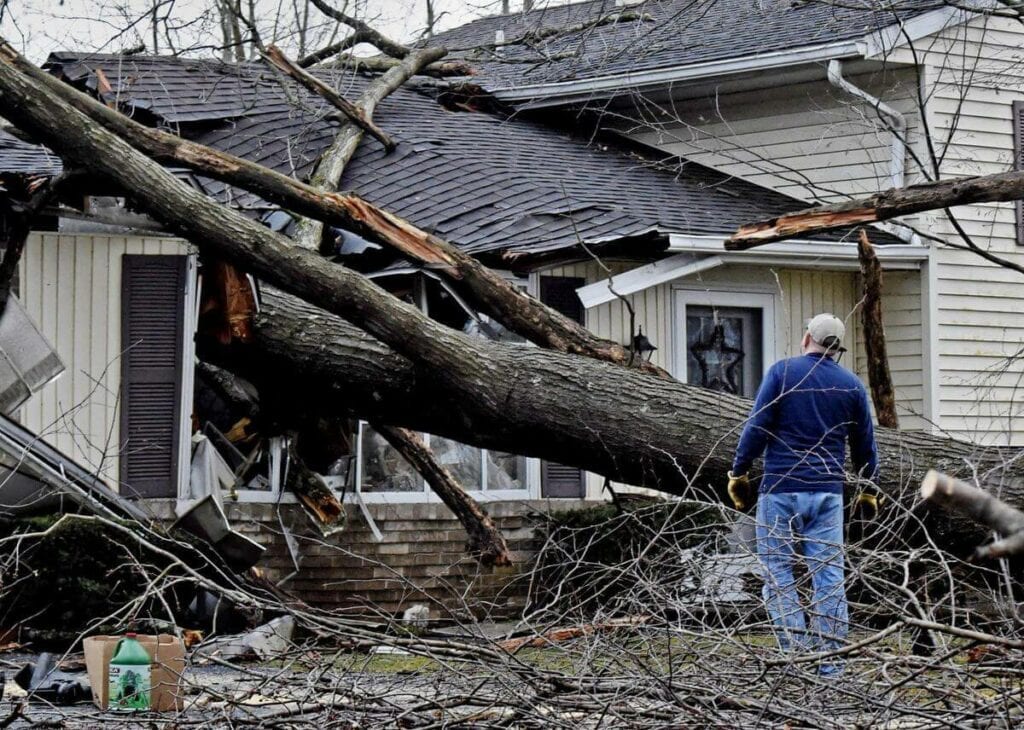
Fallen limbs, scattered debris, and broken building materials aren’t just a mess they’re a hazard, and they often hide damage underneath. We clear it safely and check what it’s been sitting on.
4. You Smell Something Musty or See Damp Spots
Musty odors, bubbling paint, warped floors, and soft drywall usually mean water is traveling somewhere you can’t see it. Our moisture meters and thermal equipment find hidden water behind walls and under floors before it becomes a mold problem.
5. The Damage Is Spreading or Getting Worse
Storm damage never stays the same size. A wet corner becomes rotted framing. A small roof leak becomes a ceiling collapse. If it looked bad yesterday and looks worse today, that trend continues until someone stops it.
6. You're Filing an Insurance Claim and Don't Know Where to Start
Insurance companies want the damage documented, mitigated promptly, and repaired properly and a homeowner guessing their way through that process usually leaves money on the table. We document everything thoroughly and can walk you through what your adjuster will need.
Here's Exactly What Happens When You Call Us
The first thing we do is listen. You tell us what happened, and we tell you what to do right away, shut off water, stay out of certain areas, take photos if it’s safe. Then we dispatch a crew to your address.
On site, we start with a full damage assessment: water intrusion, roof and exterior openings, debris hazards, and hidden moisture behind walls and under floors. We stabilize the emergency first, extracting standing water, tarping exposed roof sections, boarding up openings so the damage stops growing while we work. From there, industrial drying equipment runs until moisture readings confirm your home is actually dry, not just dry-looking.
We document every step for your insurance claim, and once the property is stable and dry, we handle the repairs needed to put your home back the way it was.
Specific Work Practices Include:
- Assessment first, always. We inspect every affected area including moisture hidden behind walls and beneath floors using professional detection equipment. You get an honest picture of the full damage before any work begins, so there are no surprise discoveries halfway through the job.
- Stop the bleeding immediately. Standing water gets extracted, exposed roofs get tarped, broken openings get boarded up, and debris gets cleared on day one. The single biggest factor in your final repair cost is how fast the damage is stabilized.
- Verified dry, not guessed dry. We monitor moisture levels throughout the drying process and don’t call it done until the readings say so. This is what prevents the mold and rot problems that show up months later when drying is rushed.
Chicago Weather Keeps Us Busy. That Experience Works for You.
Anyone who’s lived through a few Chicago summers knows what our storms can do, flooded basements after a downpour, wind-torn roofs, hail-battered siding, trees down across half a block. We’ve been restoring storm and water damaged homes across this city for years, and there isn’t much the weather here can throw at a house that we haven’t already fixed.
That experience matters when you’re the one standing in the water. We know how Chicago’s housing stock behaves when it gets wet from older frame construction to newer builds and we know how to dry it, repair it, and document it so your insurance claim holds up. When we give you an assessment, it comes from years of doing this work in your neighborhood, not a script.
Our Emergency Response Covers:
- Rapid on-site arrival, 24/7 including nights, weekends, and holidays
- Full damage evaluation to find the source, the extent, and the hidden moisture
- Immediate stabilization: water extraction, roof tarping, board-up, and debris removal
- Complete documentation for your insurance claim
- Coordination with required regulatory agencies when applicable
Request an Estimate Today!
Frequently Asked Questions
Yes, Farez Finish Restoration provides emergency storm and water damage restoration throughout Chicago, IL, responding around the clock to homes and businesses hit by severe weather, flooding, and water intrusion. Chicago's climate puts properties through the full range of conditions, from violent spring thunderstorms and flash flooding to blizzards, ice storms, and the freeze-thaw cycles that stress roofing and plumbing every winter. Whether the call comes from a brick bungalow on the Southwest Side, a two-flat in Logan Square, or a commercial property near the Loop, our crews arrive with the equipment needed to start emergency mitigation the same day.
Farez Finish Restoration handles emergency water extraction, structural drying, storm damage repair, roof tarping, basement flood cleanup, sewer backup remediation, mold prevention treatment, and full reconstruction after major losses. We also manage smoke and fire damage restoration, since Chicago's severe electrical storms sometimes ignite fires in addition to causing flooding. Every job is documented thoroughly from the first hour through the final repair so that insurance claims have the evidence they need to move forward without unnecessary delays.
Chicago's combined sewer system, which carries both stormwater and sanitary sewage in the same pipes, is one of the primary culprits behind basement flooding during heavy rain events. When a major storm drops several inches of rain in a short window, the system can become overwhelmed and force contaminated water back up through floor drains and toilets into basements throughout the city. Older neighborhoods on the North Side, South Side, and West Side are especially vulnerable because the infrastructure in those areas predates modern stormwater management standards by decades. Farez Finish Restoration treats every basement flood involving sewer backup as a biohazard cleanup, which requires a different process than a clean water event.
Spring and summer in Chicago bring some of the most intense thunderstorms in the Midwest, with frequent tornado watches, high straight line winds, and rain totals that can reach several inches within an hour or two. These events generate a wide variety of damage, including torn off roofing on older two-flats and bungalows, hail damage to siding and flat roofs on commercial buildings, window failures from wind pressure, and basement flooding triggered by overwhelmed drainage systems. Farez Finish Restoration responds to all of these, from emergency tarping and board-up after structural damage to full water extraction and drying after a building takes in significant water through a compromised roof or wall.
Absolutely, and this is one of the most common cold weather emergencies Farez Finish Restoration responds to throughout Chicago. Pipes that run through exterior walls or uninsulated attic spaces are vulnerable to freezing during the polar vortex events that hit the city hard in January and February, and when those pipes thaw they can release large volumes of water very quickly. Ice dams along rooflines are another winter specific concern, particularly on older homes where attic insulation does not meet today's standards, causing melt water to back up under shingles and eventually seep through ceilings. These situations require fast extraction and drying to prevent the secondary mold growth that follows if moisture is left to sit.
Flat or low slope roofs are extremely common across Chicago's commercial buildings, apartment complexes, and older two-flats, and they carry a specific vulnerability during heavy rain and hail events. When roof drains become clogged with debris or a roofing membrane is already showing wear, water can pond rapidly and find its way through any compromised seam or penetration into the building below. A single storm can affect multiple units in a stacked building at once, since water travels downward through ceilings and walls from one floor to the next. Farez Finish Restoration handles emergency tarping and extraction on these buildings as the first step, then assesses how far water has traveled before beginning the drying process.
Lake Michigan creates its own weather patterns that can bring intense, localized storms to the Chicago lakefront and the neighborhoods closest to the water, including Lincoln Park, Lakeview, Hyde Park, and South Shore. Late fall and early winter lake effect events can dump heavy, wet snow in concentrated bands that overwhelm gutters and drainage systems very quickly, while the wind speeds off the lake during severe weather regularly exceed what the same storm produces further inland. Farez Finish Restoration is familiar with how lakefront exposure accelerates moisture related damage, and our crews account for the higher ambient humidity near the water when planning drying timelines for affected properties.
Chicago's brick bungalow belt stretching across the Southwest and Northwest Sides, along with the two-flats and three-flats common throughout neighborhoods like Pilsen, Bridgeport, and Avondale, presents some specific restoration challenges. These buildings often have original plaster walls, wood lath, and older foundation drainage systems that were not designed for today's moisture control expectations. Water migrates differently through plaster than it does through modern drywall, and drying these older materials requires longer timelines and careful moisture monitoring to avoid causing additional damage. Farez Finish Restoration has direct experience working within the structural character of Chicago's historic housing stock while still getting the building fully dry.
Properties near the Chicago River main stem and its North and South Branches can face elevated flood risk during periods of intense, sustained rainfall, particularly in areas where the river corridor passes through older industrial and mixed use zones that have less green space to absorb runoff. Neighborhoods like Goose Island, Bucktown near the North Branch, and parts of Chinatown near the South Branch sit closest to these flood exposure zones. Farez Finish Restoration treats flood events near the river as potential Category 3 water situations, since river water carries contamination that requires full biohazard level cleanup rather than a simple extraction and dry out.
Mold can begin colonizing wet materials within 24 to 48 hours of water exposure, and Chicago's humid summers create some of the fastest conditions in the country for mold to take hold once moisture gets into a structure. A basement that floods during a July thunderstorm and is not dried out within the first day or two can develop visible mold growth within a week, and the combination of Chicago heat and indoor humidity dramatically accelerates that timeline. Farez Finish Restoration focuses on getting extraction and drying equipment in place as quickly as possible after an emergency call, since the difference between a same-day response and a two-day delay can be the difference between a straightforward drying job and a full mold remediation project on top of it.
If it is safe to do so, shut off electricity to any affected areas before entering standing water, since basement flooding in particular puts you in close proximity to electrical systems. Do not attempt to wade through water near your electrical panel or any outlets. If the flooding came up through a floor drain or toilet, treat that water as contaminated and avoid direct contact. Move valuables and furniture to dry areas if you can do so without entering the water, take a few photos for documentation, then call Farez Finish Restoration right away at (312) 785-1263 rather than waiting to see if it recedes on its own. Every hour of delay in a Chicago summer significantly increases the risk of mold taking hold.
When a crew arrives for an emergency storm or water damage call in Chicago, the first step is a rapid inspection to identify all entry points, trace how far water has traveled through the structure, and classify the type of water involved. Any structural openings get tarped or boarded immediately to stop further exposure. Water extraction comes next, followed by removal of materials like saturated carpet, padding, and drywall that cannot be effectively dried in place. Commercial grade dehumidifiers and air movers go in to begin the structural drying phase, with moisture readings taken daily to track progress. Once the structure tests fully dry, Farez Finish Restoration moves into repairs and rebuilding to restore the property to its prior condition.
Yes, every emergency storm and water damage job is documented with photos, moisture readings, and detailed written records from the moment our crew arrives through the completion of repairs. Farez Finish Restoration can communicate directly with most insurance carriers about the scope of damage and the work being performed, which takes a significant burden off homeowners and business owners who are already managing a stressful situation. It is worth knowing that standard homeowners insurance in Illinois often covers sudden storm and water damage from above but does not automatically cover sewer backup, which requires a separate endorsement, so our team documents the specific source of water involved to help clarify what falls under which part of your policy.
Yes, and this distinction matters significantly for both health and insurance purposes. Sewer backup water is classified as Category 3, or black water, which carries bacteria, pathogens, and contaminants that require full personal protective equipment during cleanup and mandatory removal of all affected porous materials including flooring, drywall, and insulation rather than drying them in place. Farez Finish Restoration treats every Chicago sewer backup job as a biohazard cleanup, sanitizing all surfaces after materials are removed and confirming safe conditions before any rebuilding begins. This is a different process than handling rainwater that comes in through a window or roof opening, and attempting to dry a sewer backup with fans and dehumidifiers alone without proper removal and sanitation is not a safe approach.
The structural drying phase of a water damage job typically takes three to five days for a standard residential loss, though Chicago's summer humidity can extend that window compared to drier climates. A basement flood from a combined sewer overflow often takes closer to five to seven days to dry completely once contaminated materials are removed, since the subgrade environment retains moisture longer than above grade spaces. Larger commercial losses, older buildings with plaster walls and lath construction, or situations where water sat unaddressed for more than a day before cleanup began can extend the timeline further. Reconstruction timelines depend on the scope of what needs to be rebuilt after drying is confirmed.
Yes, multi-unit buildings, including the two-flats, three-flats, and larger apartment buildings that make up a significant share of Chicago's housing stock, are handled with the coordination they require. A roof failure or plumbing rupture in a stacked building can affect multiple units at once, which means working with a building owner or property manager alongside individual tenants to keep everyone informed and to document each affected unit separately for insurance purposes. Farez Finish Restoration manages these larger scope jobs without requiring affected residents to coordinate the process themselves, which is particularly important when displacement is involved and timelines matter for getting people back into their homes.
A musty odor in the basement or a lower level room that was not there before a storm is one of the most common signs that moisture is still present even after visible standing water has been cleaned up. Bubbling or peeling paint on walls, soft spots in flooring near the base of exterior walls, discoloration creeping up from baseboards, and efflorescence, which is the white chalky mineral residue that appears on masonry and concrete block basement walls when water has been moving through them, are all worth paying attention to. Chicago's older masonry construction can absorb and hold water in ways that are not immediately visible from inside the living space, so a post-storm inspection by a restoration professional is worth scheduling even when things look dry on the surface.
Yes, tornado and straight-line wind events in the Chicago area can cause a combination of structural damage and water intrusion that calls for immediate emergency response. When high winds tear off roofing material or break windows, the rain that follows in the same storm system can dump significant water into an exposed structure very quickly. Farez Finish Restoration responds to these events with emergency tarping and board-up as the first priority to stop ongoing exposure, followed by extraction and drying of whatever has already come in. The Chicagoland region has a documented history of severe derecho events and tornado touchdowns in outlying areas, and our team treats each of these emergencies with the urgency they require.
In addition to all Chicago neighborhoods, Farez Finish Restoration serves the surrounding Chicagoland communities including Evanston, Oak Park, Cicero, Berwyn, Skokie, Des Plaines, Schaumburg, Naperville, Joliet, and the broader Cook, DuPage, and Will County areas. Major storms typically affect a wide geographic footprint across the metro region rather than a single neighborhood, and our team is positioned to respond quickly across this coverage area whether the call comes from a home in the Lakeview corridor or a business further out in the western suburbs.
Chicago property owners can reach Farez Finish Restoration around the clock by calling (312) 785-1263 for immediate emergency storm and water damage response. We answer every hour of every day because storms do not follow business hours, and every hour of delay after a major water event increases the risk of mold and structural damage that could have been prevented with a faster response. Whether you are dealing with a flooded basement on the South Side after a heavy rain, a wind-damaged roof on the North Shore, or a burst pipe after a freeze event in the middle of January, our team is ready to dispatch help promptly anywhere in Chicago or the surrounding area. You can also learn more about our services at farezfinishrestoration.com.
There are Plenty of Storm Damage Cleanup & Repair Companies in Chicago, IL
So Why Choose Us?

A Real Person Answers Your Call

Insurance Claims Made Simpler

One Company From Emergency
Most companies handle one piece of the problem and leave you coordinating the rest. We take it from wet and damaged to fully restored, cleanup, drying, and repairs, all under one roof.

Family Operated & Accountable
Our name is on every job. As a Chicago family business, we win work through reputation and referrals which means we can’t afford to cut a single corner on your home.
Based in Chicago, IL
We serve the Chicago metro area, including Chicago, Barrington, Naperville, Northbrook, Wilmette, Evanston, Skokie, Lincoln Park, and Lakeview, plus nearby communities. By staying focused on this region, we can respond faster and provide dependable restoration services when you need help most.
- Chicago, IL
- Barrington, IL
- Naperville, IL
- Northbrook, IL
- Wilmette, IL
- Evanston, IL
- Skokie, IL
- Schaumburg, IL

We're Available 24/7 for Any Storm Damage Emergency You Might Have
Contact Us Today!
For more information or to schedule service, contact us at (312) 785-1263 or submit the contact form. Our team will be in touch promptly.
OR CALL US 24/7
(312) 785-1263